
The Nigeria Labour Congress (NLC) has threatened to embark on nationwide protests and boycott elections over what it described as inconsistent and unclear positions taken by the Senate on amendments to the Electoral Act.
The labour union alleged that the Senate’s failure to clearly define whether electronic transmission of results would be compulsory has weakened public confidence in the country’s electoral framework.
“The Nigeria Labour Congress (NLC) expresses deep concern over the confusion and contradictory narratives emerging from the Senate regarding the amendment to the 2022 Electoral Act, particularly on electronic transmission of results,” NLC President Joe Ajaero said in a statement on Sunday.
The NLC argued that uncertainty surrounding the Senate’s resolution poses a threat to electoral credibility and public trust, noting that “Nigerians deserve a transparent system where votes are not only counted but seen to be counted.”
According to the union, official legislative records indicate that the proposal to make it mandatory for the Independent National Electoral Commission (INEC) to transmit results electronically in real time was rejected, leaving the earlier discretionary provision intact.
“Public records suggest the proposed amendment to mandate the Independent National Electoral Commission (INEC) to transmit results electronically in real time was not adopted, with the existing discretionary provision retained.
“This has generated nationwide apprehension, and subsequent explanations have only added to the confusion,” the union added.
The NLC warned that such “legislative ambiguity,” especially at a sensitive period following the 2023 general elections, could entrench distrust within the electoral system.
The Congress called on the Senate to release an “immediate, official, and unambiguous account” detailing the exact clauses passed into law, including the final language used and the reasons behind the decisions taken.
“The National Assembly leadership must also ensure the harmonisation process produces a final bill with crystal-clear provisions; any ambiguity in the transmission and collation of results is a disservice to our democracy,” the statement read.
Emphasising its position, the NLC maintained that the amended Electoral Act must expressly compel INEC to transmit and collate results electronically from polling units in real time, cautioning that failure to do so could provoke widespread resistance.
“Failure to add electronic transmission in real time will lead to mass action before, during and after the election, or total boycott of the election,” the Congress said.
“Nigerian workers and citizens are watching closely. Our nation must choose the path of clarity and integrity. We need to avoid the same confusion that trailed the new Tax Acts. The time for honest, people-focused legislation is now.”
The warning comes on the heels of the Senate’s passage of the Electoral Act 2022 (Repeal and Re-enactment) Amendment Bill 2026, which scaled third reading on February 4, 2026.
During deliberations, senators voted against Clause 60(3), which sought to compel presiding officers to transmit polling unit results electronically and in real time to INEC’s Result Viewing portal.
The clause, which was intended to make electronic transmission mandatory, was subsequently discarded.
In its place, lawmakers retained the existing discretionary provision allowing electronic transmission only after votes have been counted and publicly declared at polling units.
The Senate’s decision has drawn criticism from civil society organisations and opposition leaders, who have described it as a regression in Nigeria’s democratic evolution.
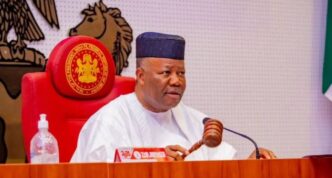
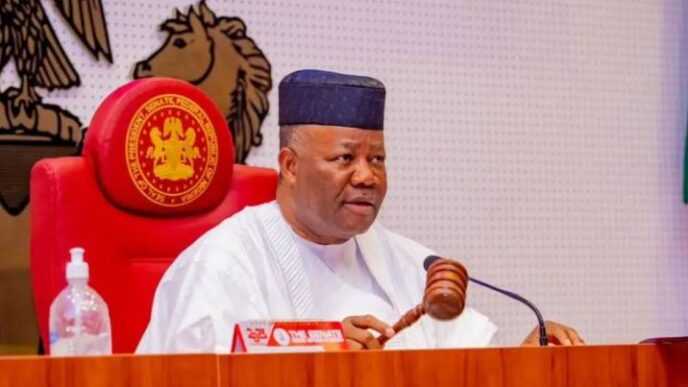
However, Senate President Godswill Akpabio has defended the chamber’s stance, asserting at a public function that electronic transmission was not rejected and stressing that the Senate would not succumb to intimidation.
Meanwhile, the Senate has scheduled an emergency plenary session for Tuesday, February 10, 2026.
The session may provide an opportunity for lawmakers to revisit the rejected amendment amid growing public pressure and looming legal challenges from figures such as human rights lawyer Femi Falana, with broader consequences for Nigeria’s democratic integrity and the balance between incumbency interests and transparent voting technology.