


By Omolola Johnson
Public office comes with scrutiny. Those entrusted with positions of national importance should expect their decisions, conduct, and records to be examined by the public. That scrutiny is not only healthy for democracy and accountability; it is necessary.
However, there is a clear difference between holding public officials accountable and allowing outright falsehoods, defamatory, injurious, cyberbullying/stalking, and personal attacks to define their person and legacy under the guise of journalism or free speech. It is now a serious crime in Nigeria to do so.
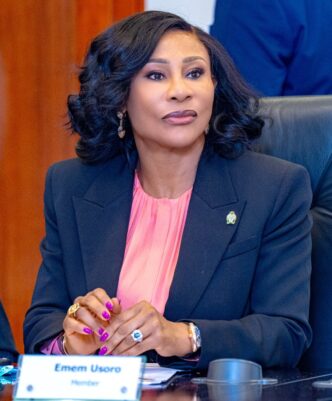
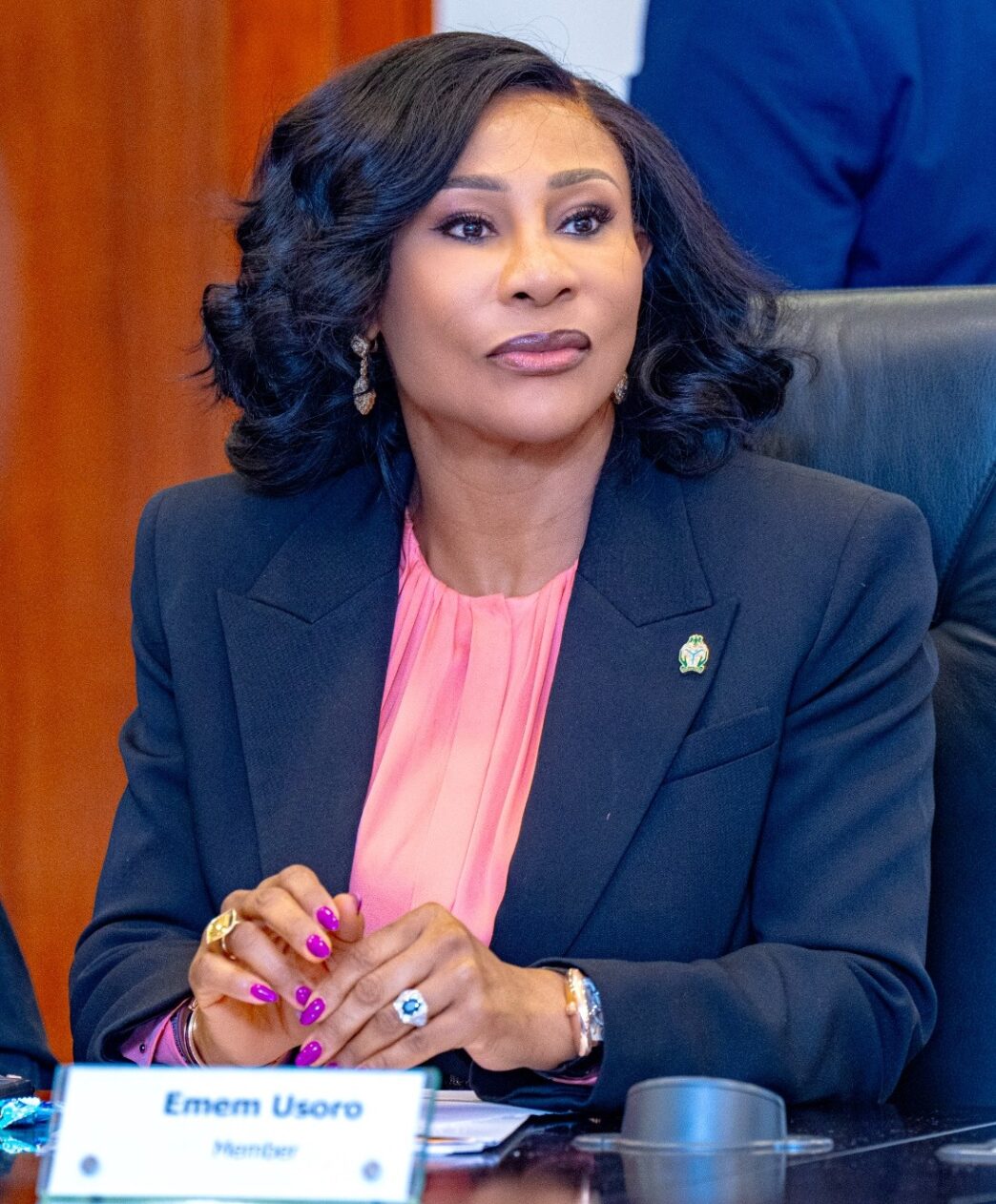
This is why the recent defamatory and injurious articles authored online against the cerebral Ms. Emem Usoro, the Central Bank of Nigeria (CBN) Deputy Governor, deserve a closer look and ought to be outrightly condemned and the authors reprimanded.
Firstly, the authors claimed Usoro did not formally declare her ownership of two real estate assets she owns in the state of California, USA, when she assumed office at the CBN. This rehearsed allegation is totally false because they are included in her asset declaration form at the Code of Conduct Bureau. If the authors of the report had the credibility they sought from public officers, they would have known this fact by simply formally asking the Bureau for information under the FOI.
In another affront akin to cyberbullying, the report defamed Usoro when it cited an unsubstantiated and unproven claim made by a third party in a 2020 matrimonial lawsuit that died a natural death before it even started.
The motive of the authors is clear as it is often their practice – Money. They target high-profile persons and try to bully and blackmail them by authoring unsubstantiated allegations and falsehoods with the intention of getting a monetary reward out of the person. This is not journalism at all. It is brigandage.
While the falsehoods have generated headlines, they have also raised a broader question: Should decades of professional service, proven competence, and accountability be overshadowed by claims that remain bogus?
Usoro is not a newcomer to Nigeria’s financial sector. Long before her appointment as Deputy Governor of the Central Bank in September 2023, she had built a career spanning more than two decades in commercial banking.
During her time at the United Bank for Africa (UBA), she steadily rose through the ranks to become Executive Director, overseeing operations across seven regional banks and over 150 branches in the north, and earning recognition as one of the institution’s leading executives. Before that, she held regional leadership roles at Bank PHB and worked in Zenith Bank Plc.
At UBA, Usoro championed grassroots financial inclusion through financial literacy and educational programs for small-scale traders and women, while helping expand access to formal banking across communities in northern Nigeria.
Her professional achievements earned her multiple CEO Awards and recognition in UBA’s ‘Superwoman’initiative; she also became a Fellow of the Chartered Institute of Bankers of Nigeria. She holds a biochemistry degree from the University of Uyo and an MBA from Obafemi Awolowo University and has since sharpened her expertise through executive programs at both the Lagos Business School and Harvard Business School amongst other renowned institutes.
Usoro is also known for her charitable deeds through her Nnnana Usoro Foundation, where hundreds of beneficiaries especially widows have received free surgeries and medical interventions as well as financial grants and foodstuffs.
Her appointment as Deputy Governor followed the constitutional process of presidential nomination and Senate confirmation, a vetting process designed to assess the competence of those entrusted with such positions.
Today, she oversees some of the Central Bank’s most critical responsibilities, including banking operations, reserve management, currency operations, and information technology, functions that demand technical expertise, integrity, and years of practical experience.
None of these means Usoro should be immune from questioning. Where there are real questions about disclosure or conduct, they deserve real answers through the institutions built to provide them, including a responsible press, not the rogues and hustlers riding on the wagon of journalism.
There’s a difference between demanding accountability and drawing meaningless attention to aspects of her private life through references to a now-dismissed legal filing in a matrimonial dispute involving third parties. Whether or not such claims attract public curiosity, they have little bearing on her performance as a banking executive or as Deputy Governor of the Central Bank. One can clearly see the mischief behind the website’s publications.
A career built over twenty years shouldn’t be rewritten in the space of a fake news cycle, and a reputation earned through work shouldn’t be allowed to be damaged by jobbers looking for their next payday.
Like many women who have risen to senior leadership positions in traditionally male-dominated sectors in Nigeria, Usoro has openly spoken about balancing career responsibilities with family life and overcoming barriers through competence and hard work. She has often said that success should create opportunities for others rather than end with personal achievement.
That belief shows in her mentorship of younger women pursuing careers in finance and in her support for community development work outside the bank. Those experiences have made her a role model for many young professionals seeking careers in finance and public service.
A reputation is built over many years through hard work, discipline, and results. It can, however, be damaged within minutes by sensational headlines and repeated false allegations, especially in today’s fast-moving digital environment.
That is why fairness and responsible use of the press matter. It is possible to demand accountability while also insisting that people are judged on verified facts rather than speculation and outright falsehood.
It is important that journalism remains grounded in facts rather than speculation and lies. Public officials must answer legitimate questions where necessary, but they also deserve the same fairness and presumption of innocence that the rule of law guarantees every citizen.
In the end, public servants should be remembered first for the quality of their service, the integrity of their work, and the impact they leave behind, not by the false narratives and outright lies of hustlers and blackmailers parading as journalists.
Johnson writes from Lagos.