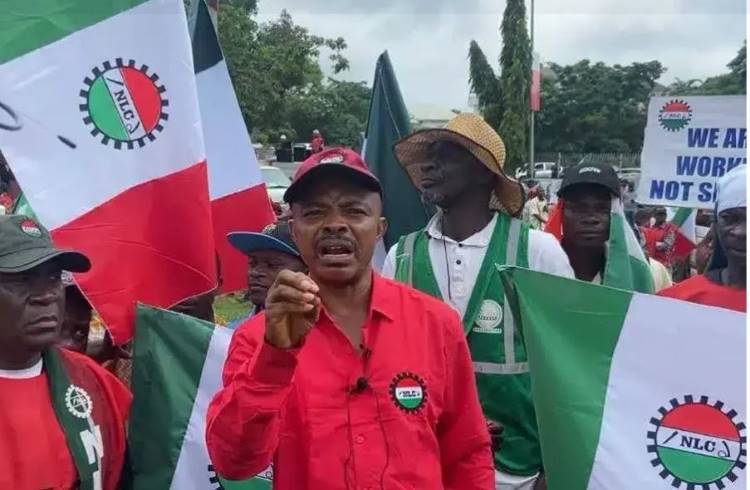
The Nigeria Labour Congress (NLC) has called on the federal government to merge the ministries of power and petroleum resources into a single ministry of energy.
It was gathered that this would form part of efforts to address Nigeria’s persistent electricity challenges.
Joe Ajaero, NLC president in a statement on Sunday, said the proposed merger would tackle structural inefficiencies in the energy sector, particularly the dependence of thermal power plants on gas supply.
He described the current arrangement as fragmented and ineffective, noting that it had contributed to the stagnation of the power sector and hindered economic growth.
“Therefore, we are proposing a radical structural intervention: the immediate merger of the federal ministry of petroleum and the federal ministry of power to create a single, unified ministry of energy,” Ajaero said.
The labour union argued that the separation of the two ministries had created a disconnect, with the petroleum sector prioritising exports while the power sector struggles with inadequate gas supply.
“This gas is controlled by an industry that operates like a rent-seeking enclave with no accountability to the people’s need for electricity,” the union stated.
It added that the existing structure encourages a blame game between agencies, saying a unified ministry would ensure accountability.
“Under a single ministry, there would be one minister accountable to the Nigerian people. This would end the era where the Power Minister blames the Petroleum Minister, and the Petroleum Minister blames ‘market forces’,” Ajaero said.
The NLC further criticised the proposed ₦6 trillion bailout for power generation companies, describing it as a superficial solution to deeper systemic problems.
According to the union, the merger would enable holistic energy planning, prioritise domestic gas utilisation, and support fair electricity pricing.
“It will ensure that gas is first and foremost used to generate domestic power to industrialise the nation and create jobs, rather than being flared or exported while Nigerians suffer in darkness,” the statement added.
Reiterating its stance, the NLC maintained that electricity should be treated as a social service rather than a profit-driven commodity, calling for a shift towards public interest-driven energy management.