The federal government has directed financial institutions and designated non-financial businesses and professions to fully comply with sanctions obligations, including freezing the assets of terrorism financiers.
The directive follows sanctions imposed by the United States on a Nigerian alleged ISIS financier and three Bureaux De Change (BDCs) operating in Lagos and Kano.
The US government, invoking Executive Order 13224, sanctioned the Lagos-based financier, Mukhtar Adamu Muhammad, 35, alongside Generation Currency Bureau De Change Limited; Nine to Nine Exchange Bureau De Change Limited; and Manhattan Bureau De Change Limited for allegedly facilitating funds for ISIS as part of a broader crackdown on the group’s financial networks across Europe, the Middle East, and West Africa.
In addition to these names, the Federal Government had earlier, on June 18, 2026, listed six more individuals and one entity for sanctions. They include Ibrahim Yakubu Ogirima; Adamu Chiroma; Ibrahim Abubakar; Abdullahi Umar Usman; Babangida Muhammed; Adamu Hammajam; and Abbal Bako & Sons Bureau De Change Limited.
Reacting to the US action, the Nigerian Sanctions Committee stated: “The Federal Government reiterates its directive to all financial institutions and designated non-financial businesses and professions to comply fully with all sanctions obligations, including asset-freezing requirements, the filing of Suspicious Transaction Reports and the reporting of relevant matches to the appropriate authorities.’’
The committee emphasized that terrorists and their financiers would find no safe haven within Nigeria’s financial system, noting that the US action reinforces Nigeria’s existing sanctions and signals a coordinated international effort to dismantle terrorist financing networks.
The committee also welcomed the decision of the United States Office of Foreign Assets Control (OFAC) to designate Mukthar Muhammad Adamu, Nine to Nine BDC Limited, and Generation Currency BDC Limited.
“These were among those included in an update to the Nigeria Sanctions List published on June 18, 2026.
“Nigeria remains resolute in its commitment to ensuring that terrorists and their financiers find no safe haven within the country’s financial system,” the statement said.
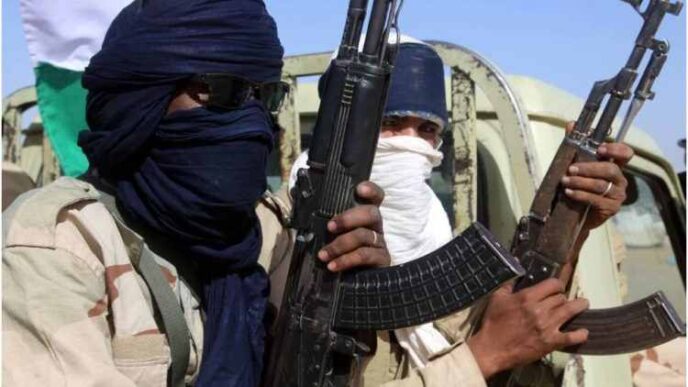
According to the committee, the sanctions followed extensive intelligence gathering, financial investigations, and inter-agency collaboration, which established reasonable grounds to believe that the affected individuals and entities “facilitated, financed, supported or otherwise contributed to the activities of the Islamic State West Africa Province, ISWAP, and associated terrorist networks.”
The committee further commended the Federal Ministry of Justice and the Office of the National Security Adviser for their roles in the sanctions process.
It also praised the Central Bank of Nigeria, the Department of State Services, the Economic and Financial Crimes Commission, and the Nigerian Financial Intelligence Unit for their support in cutting off the financial lifelines of terrorist organisations.
Reaffirming Nigeria’s commitment to collaboration, the committee stated: “The government will continue to work closely with domestic stakeholders and international partners to safeguard national security, strengthen financial integrity and contribute to global efforts to combat terrorism and terrorist financing.”
In a related development, the Chief of Defence Intelligence (CDI), Lt. Gen. Emmanuel Undiandeye, disclosed that Nigeria’s military, working closely with allies including the US, UK, and France, has significantly weakened terrorist groups operating in the country.
Speaking at the Second Quarter Operations Briefing for Foreign Defence Advisers and Attachés at DIA headquarters, he said ISIS leadership, Boko Haram fighters, and other terrorist elements have suffered major losses, with many foot soldiers and commanders neutralized by Nigerian forces.
“Our forces have assaulted, decimated and decapitated them so much that their logistics, arms and ammunition couriers and other supporting networks have been vanquished.
“Nigeria is secured. The security challenges confronting our nation have largely been contained by the armed forces employing better operational capabilities, intelligence and technology in close coordination with our allied partners, particularly the US, UK and France.”
Lt. Gen. Undiandeye explained that the briefing was designed to provide foreign defence advisers with an accurate picture of Nigeria’s security situation.
He added that it also highlights the strong collaboration among security and intelligence agencies, which continues to yield significant operational successes across multiple fronts.
In his remarks, the Director of Foreign Liaison, Major General Ojogbane Adegbe, noted that the briefing serves as a platform for engagement between defence advisers, security agencies, and key stakeholders.
“It is also a forum in which accredited DA’s and Attached interact not only with the agency but also other sister security agencies and stakeholders who work closely with the armed forces of Nigeria to ensure security of lives of the citizenry,’’ he added.