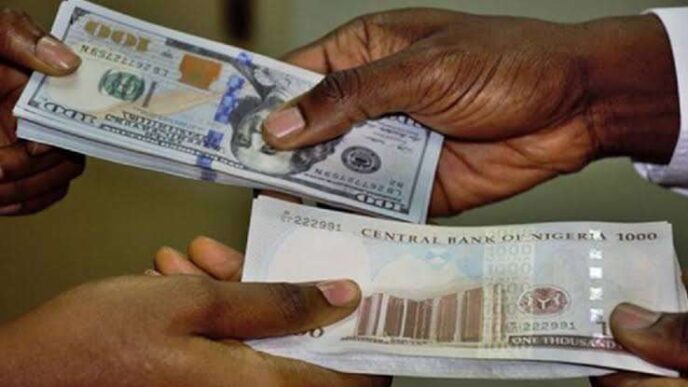
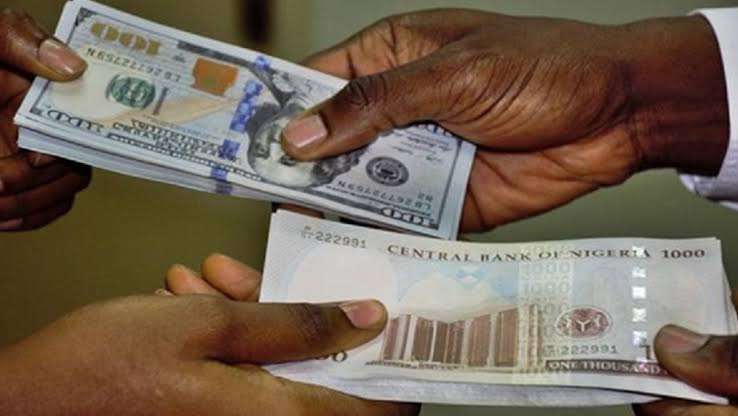
The naira on Monday strengthened to a two-year high of N1,347.78 per dollar at the official market.
Data released by the apex bank showed the currency appreciated by N7.64, representing a 0.57 per cent gain from N1,355.42 recorded on Friday at the Nigerian Foreign Exchange Market.
At the parallel market, the naira also gained ground, closing at N1,380 per dollar after opening at N1,390.
The N40 appreciation from Friday’s N1,420 rate reflected a 2.89 per cent improvement, reducing the spread between the official and informal markets to N33 from N92 recorded last Wednesday.
Market participants attributed the sustained convergence to renewed confidence following the CBN’s decision to allow licensed BDCs to resume participation in the official window.
Aminu Gwadabe, president of the association of bureaux de change Operators of Nigeria, said the long-awaited operational framework would be released within the week.
According to him, “The operationalisation guidelines will be released within the week for the takeoff of trading.”
On February 10, the CBN formally reopened access to the official FX market to duly licensed BDCs, permitting them to purchase foreign exchange through authorised dealer banks at prevailing rates.
The move is aimed at boosting retail dollar liquidity and easing persistent pressure in the parallel market.
Analysts at the Financial Market Dealers Association said broader BDC participation would deepen liquidity, enhance price discovery, and improve distribution within the formal FX segment.
Under the revised framework, authorised dealer banks must conduct full know-your-customer checks before selling foreign currency to BDCs strictly for eligible retail transactions.
Each bureau is subject to a weekly cap of $150,000.
The guidelines also impose strict controls: foreign exchange purchased but not utilised must be resold within 24 hours, while BDCs are barred from holding positions funded through the official window.
Cash transactions are limited to 25 per cent of each deal, and all settlements must pass through licensed financial institutions to strengthen traceability and curb speculative activities.
The circular announcing the rules was signed by Musa Narkoji, Director of the Trade and Exchange Department.