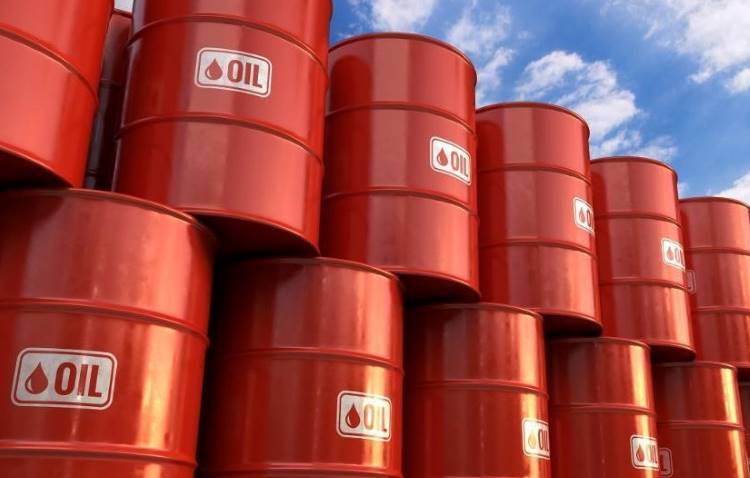
Global oil prices climbed above $100 per barrel on Monday while stock markets delivered mixed performances as the ongoing conflict involving Iran continued to unsettle global investors.
The war, which has now entered its third week, has intensified concerns about shipping through the strategic Strait of Hormuz, a critical route through which a significant portion of the world’s crude oil is transported.
Oil prices jumped early in trading after the Donald Trump, president of the United States revealed over the weekend that US forces had struck military targets on Kharg Island, an area responsible for handling a large share of Iran’s oil exports.
Trump warned that energy infrastructure could also become targets if Iran interferes with tanker movement through the Strait of Hormuz.
Posting on Truth Social, the US leader said: “The Countries of the World that receive Oil through the Hormuz Strait must take care of that passage, and we will help — A LOT! This should have always been a team effort, and now it will be.”
He also urged several countries — including China, France, Japan, South Korea and the United Kingdom — to deploy naval forces to safeguard the waterway.
However, some countries have been reluctant to take part.
Japan said it was “not at the moment considering issuing a maritime security operation,” while Australia indicated it would not send naval ships to the region.
Meanwhile, Iran rejected the possibility of negotiations with Washington.
Speaking in an interview on CBS’s Face The Nation, Iran’s foreign minister Abbas Araghchi said: “We don’t see any reason why we should talk with Americans, because we were talking with them when they decided to attack us.
“We never asked for a ceasefire, and we have never asked even for negotiation.”
Araghchi added, however, that Iran is willing to engage with countries seeking guarantees for the safe passage of vessels through regional waters.
“I cannot mention any country in particular, but we have been approached by a number of countries” seeking such assurances, he said.
Military exchanges between the two sides continued on Monday.
Saudi Arabia reported intercepting more than 60 drones overnight, while flights were temporarily halted at Dubai International Airport following a drone-related incident that caused a nearby fire.
Araghchi also condemned Israeli strikes on fuel depots in Tehran, describing them as “ecocide” because of the potential long-term environmental and health risks.
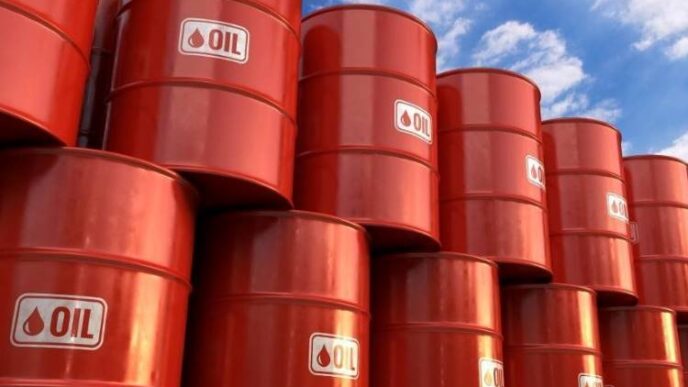
The escalating conflict has triggered volatility in the energy market. Brent crude rose by about three percent to as high as $106.50 before easing to around $104 per barrel, while West Texas Intermediate climbed above $100.
In response to the surge in prices, members of the International Energy Agency agreed last week to release a record 400 million barrels from emergency stockpiles to stabilise supply.
Japan has already begun releasing part of its strategic oil reserves following the decision.
Despite these efforts, financial markets remained cautious as concerns grow that prolonged disruption in the Strait of Hormuz could tighten global energy supply and push inflation higher.
Most Asian stock markets, including those in Tokyo, Shanghai, Sydney and Mumbai, recorded losses, although gains were seen in Hong Kong, Seoul and Singapore.
European markets opened slightly stronger, with indices in London, Frankfurt and Paris posting modest gains.
Analysts say the direction of global markets will largely depend on how soon shipping through the Strait of Hormuz returns to normal levels.
Michael Brown of Pepperstone said the economic outlook depends less on the duration of the conflict and more on whether oil shipments resume.
He said, “the impact of geopolitical events on markets, and the macro outlook, hinges more on when transits through the Strait of Hormuz begin to normalise, than it does on when hostilities come to an end.
“The longer the Strait is impassable, the tighter commodity supply will become, thus the higher prices will likely go, and the greater the inflationary impulse that will follow.”
Another analyst, Ray Attrill of National Australia Bank, warned that recent developments offered little encouragement to investors.




![UK lists 82 jobs for temporary work visas [FULL LIST]](https://witnessngr.com/wp-content/uploads/2025/07/UK-Visa-1-332x221.jpg)
![UK lists 82 jobs for temporary work visas [FULL LIST]](https://witnessngr.com/wp-content/uploads/2025/07/UK-Visa-1-688x387.jpg)