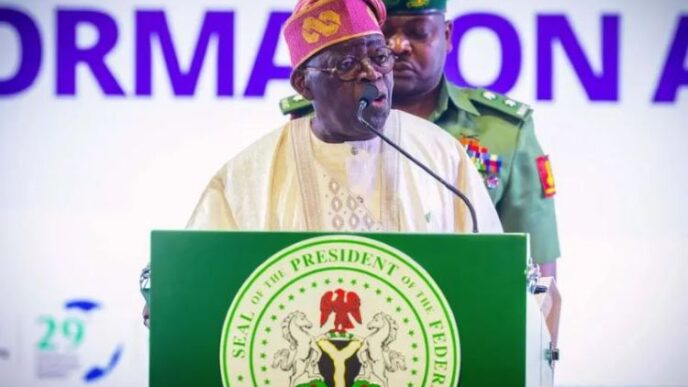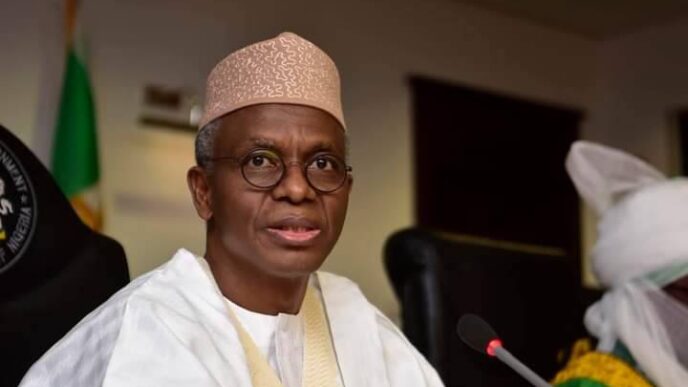
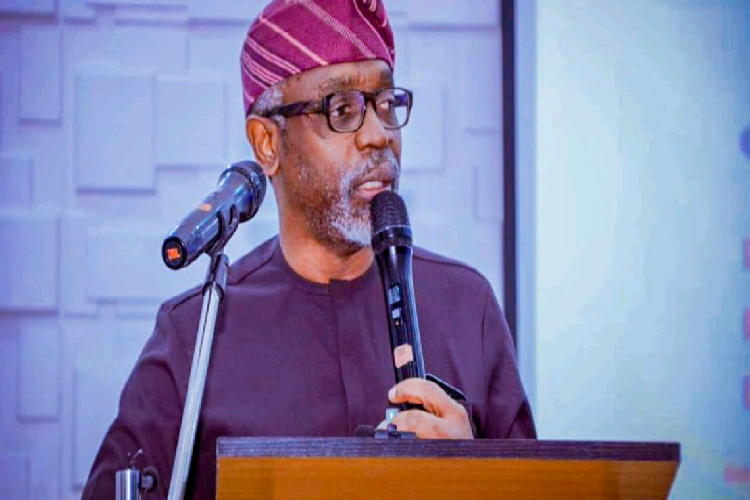
Femi Gbajabiamila, the chief of staff to the president on Monday declared that education will remain a cornerstone of President Bola Tinubu’s renewed hope agenda.
He described it as critical to Nigeria’s ambition to compete in a knowledge-driven global economy.
Gbajabiamila spoke at the 2026 International Day for Education Conference in Abuja, themed “Re-imagining the future of education in Nigeria: Collaborative solutions for a brighter tomorrow,” convened by the Speaker of the House of Representatives, Tajudeen Abbas.
Gbajabiamila recalled sponsoring the students’ loans bill to ensure that no qualified Nigerian is denied tertiary education because of financial hardship.
He noted that within the first three months of Tinubu’s administration, the bill received presidential assent, leading to the establishment of the Nigerian Education Loan Fund, which has disbursed billions of naira to eligible students across the country.
According to him, “as chief of staff to the president, you can always count on my support.
“Education will remain central to the renewed hope agenda. Nigeria’s brightest tomorrow will be built in the classrooms we strengthen today.”
Gbajabiamila stressed that education remains the most reliable pathway to national development.
Earlier, Abisoye Da Rocha-Afodu, the special adviser to the Speaker on international cooperation and educational development said the international day of education was proclaimed by the United Nations General Assembly in 2018 to affirm education as a fundamental human right.
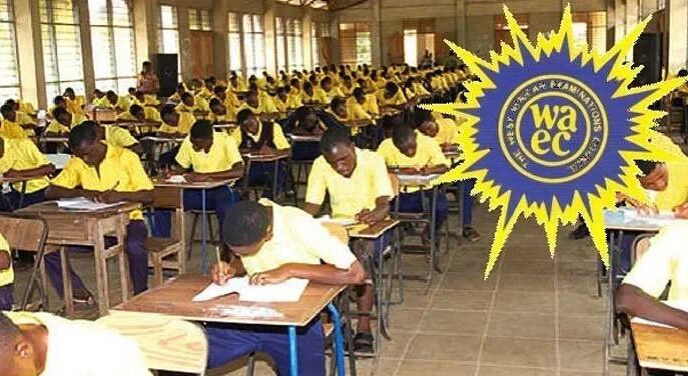
She lamented that Nigeria still has over 20 million out-of-school children — the highest globally — alongside challenges such as weak infrastructure, poor teacher welfare, outdated curricula and limited access to technology.
According to her, the conference brought together lawmakers, policymakers and development partners to develop practical and sustainable solutions.
She emphasised the need for stronger partnerships among government, the private sector and communities to expand access to inclusive and quality education, especially for girls and persons with disabilities.
Also speaking, Fuad Laguda, chairman of the house committee on federal polytechnic and higher technical education said funding remains a major constraint, particularly for polytechnics and technical institutions vital to skills development and industrial growth.
He maintained that any nation serious about sustainable development must prioritise education, urging coordinated reforms to align Nigeria’s demographic potential with bold policy action.