The Society for Family Health (SFH) has reported that malaria continues to claim lives at an alarming rate in Nigeria, with nine deaths recorded every hour.
SFH, a health-focused non-governmental organisation leading prevention efforts across Nigeria issued the report at a media orientation on malaria prevention in Kano State.
Sesugh Deborah Oryiman, SFH’s Social and Behavioural Change Specialist, said malaria disease remains a critical public health challenge, affecting 97 per cent of Nigerians, particularly children under five and pregnant women.
According to Oryiman, Nigeria alone accounts for nearly 110 million clinically diagnosed cases of malaria annually.
“Malaria kills nine people every hour in Nigeria. An estimated 30 per cent of child deaths and 11 per cent of maternal deaths each year are caused by malaria. One in every five global malaria deaths occurs in Nigeria,” Oryiman said, adding that two in every four people with malaria in West Africa are Nigerians.
This, Oryiman said, underlines the country’s heavy burden, explaining that the disease contributes significantly to school absenteeism, loss of productivity, and economic stagnation.
She stated that malaria has an estimated 40 per cent impact on Nigeria’s Gross Domestic Product (GDP), with billions of naira lost annually in treatment, prevention, and lost man-hours.
SFH, however, noted that despite the severity, a slight improvement in prevalence, with microscopy has confirmed that malaria cases in Nigeria dropped from 27 per cent in 2015 to 22 per cent in 2021.
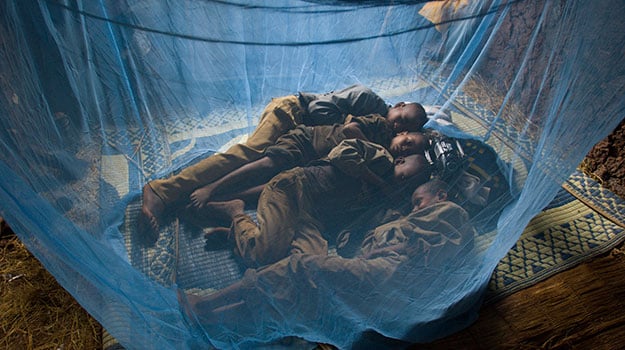
In its latest campaign, the SFH said it is set to distribute 7.7 million insecticide-treated nets across Kano and over 15 million doses of seasonal malaria chemoprevention drugs (SPAQ) to children aged between three and 59 months across the state’s 44 local government areas (LGAs).
“The distribution efforts will target the most vulnerable wards with high malaria prevalence,” Oryiman explained, emphasising the importance of prevention, especially sleeping under treated nets, describing it as the most effective and affordable strategy.
Babangida Gwarzo, the Kano State Malaria Elimination Programme Manager, said over 27,000 community mobilisers and distributors have been engaged to conduct house-to-house visits, ensuring that more than three million children receive SPAQ doses.
According to Gwarzo, caregivers would be given tokens to encourage the collection and use of the treated nets across Kano State.
Gwarzo, in his address, called on caregivers to present their children for the malaria dosage during the ongoing rainy season, which typically sees a rise in mosquito activity and malaria cases.
The campaign, the SFH, said underscores the continuing urgency of addressing malaria in Nigeria, which remains one of the countries most impacted by the disease globally.