
Operatives of the Nigeria Customs Service (NCS), Seme Area Command, have intercepted five trucks containing 2,800 bags of smuggled foreign parboiled rice, with a Duty Paid Value (DPV) of N919.5 million.
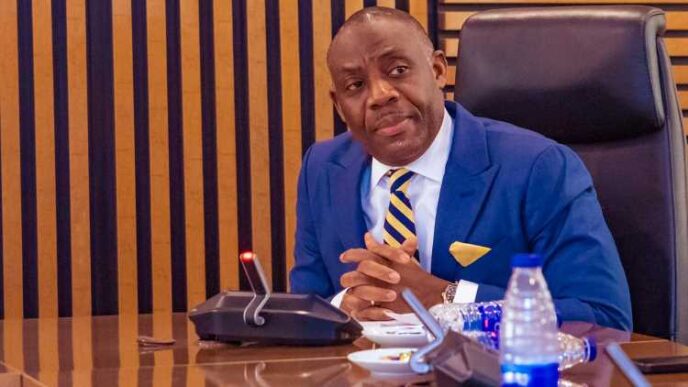
Dr. Benedict Oramalugo, the Customs Area Controller, disclosed this on Thursday during a press briefing at the Joint Border Post complex in Seme.
According to Oramalugo, the interceptions took place between July 1 and 19, 2025 following credible intelligence gathered by Customs’ operatives along the Lagos-Abidjan corridor.
Oramalugo stated that five trucks containing smuggled goods were stopped, each carrying 50kg bags of foreign parboiled rice and second-hand clothing.
“In total, 2,800 bags of rice and 250 bales of used clothing were recovered from the intercepted vehicles,” he said, explaining that the DPV of the seized rice and vehicles was estimated at N919,500,626.
Oramalugo explained that there were additional seizures between May and June, with the command recording huge success.
“Between May 14 and June 30, 2025, the command recorded other major interceptions, including additional bags of foreign rice, which brought the total quantity of seized rice to 4,119 bags,” he said.
“During the same timeframe, the command recovered various other contraband items such as cannabis sativa, sugar, flour, tomato ketchup, a boat with an engine, as well as several bales of second-hand clothing and used shoes.”
The Customs Area Controller stated that the total DPV for all seizures carried out during this period stood at N1,268,794,474.
According to Oramalugo, the success of the seizures can be attributed to the vigilance and dedication of officers and men of the Seme Command, supported by the Nigerian military.
He reiterated the Federal Government’s ban on rice imports through land borders, explaining that the policy is geared towards supporting local farmers and reducing Nigeria’s dependence on imported rice.